Saturday, October 12, 2019

The Railway Children

This children's classic by E (Edith) Nesbit was originally published in 1906 though originally it had been serialised in The London Magazine during 1905. I is the story of the adventures of three children, Roberta (Bobbie), Peter and Phyllis who move with their mother to a cottage in the country. The cottage, Three Chimneys, is near a railway line and the children enjoy the experience of watching the trains pass and getting to know the station master and the porter. They also enjoy the experience of roaming around the countryside and the village. and having adventures.

The author has the talent of describing real children who argue often but also help each other and work together when the need arises. The book however has different levels. As well as the adventures of the children the author based part of the story on incidents that occurred shortly before the writing of the book - a man being framed and gaoled for being a spy and the persecution of a  Russian author for criticising life in Russia.

Currently I am doing the Future Learn course - Living Lives on British Railways. The Railway Children was mentioned so I decided to read it and found that it provides an interesting account of how the public may have observed and used the railways at the end of the nineteenth century. E Nesbit must have liked trains. This is a book that is still being enjoyed more than 100 years after publication.

Wednesday, October 9, 2019

Voyages of the South Seas: in search of Terres Australes

While in the late eighteenth and early nineteenth centuries the English were exploring the Pacific Ocean and establishing a penal colony on the east coast of Australia the French  also sent scientific expeditions into the region. In this book Danielle Clode explores the voyages of a number of French explorers including Bougainville, Laperouse, dEntrecasteaux, Baudin, Freycinct and Dumont d'Urville between the years 1768-1828. The names of some of these explorers are commemorated as place names in Australia and and other countries in the region.

The author examines the reasons for the voyages and the discoveries made. Her writing provides different perspectives of a voyage by showing the significance of the voyage for different people. For example the first section on the explorer Laperouse imagines the thought of Louis XVI as he is about to be executed wondering about the fate of the explorer and his ship as news of the expedition was long overdue. The next person imagined in this section is the botanist Labillardiere  who wanted to amass a collection to rival the British botanist, Joseph Banks. The next person is d'Entrecasteaux who was commissioned with the task of searching for Laperouse in 1791. The journals of d'Entrecasteaux were completed and published, after his death by Rossel. There is also a section on the thoughts of Joseph Banks about the French expedions undertaken at the time. This style of writing by the author provides an interesting insight into French explorations in the Pacific, adding another layer to nineteenth century history in this region.

The Boy from Brunswick: Leonard French - a biography

The Australian artist, Leonard French (1928-2017), in Melbourne is possibly best known for the stained glass window forming the ceiling of the Great Hall, National Gallery of Victoria since the opening of the building in August 1968. He used the glasswork in the ceiling 'to paint with light' and the work has become a feature of the art gallery. It is not unusual to see people lying on the floor gazing at the magnificent ceiling.
Image result for leonard french ceiling national gallery of victoria 
Reg MacDonald, in this impressive publication, has attempted to write a history of this Australian artist and his work. This is a detailed biography of the artist who was born in the Melbourne suburb of Brunswick.
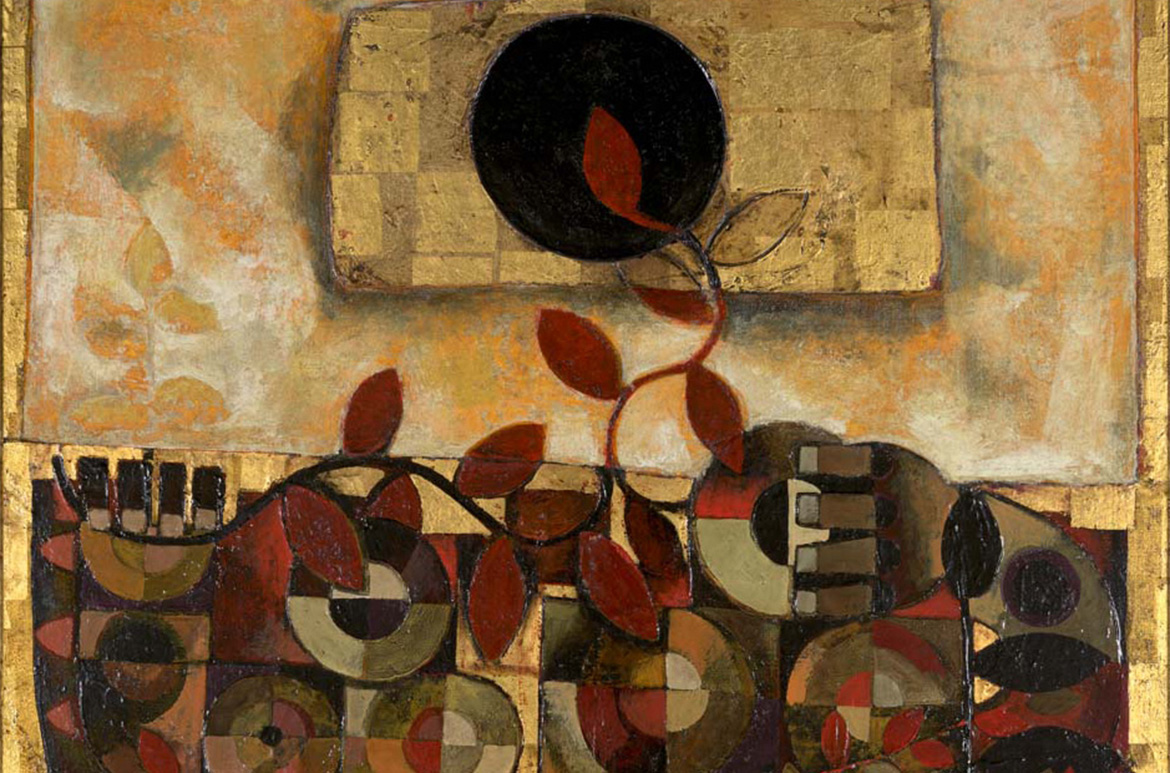
Image result for leonard french artworks
Autumn in the garden 1960
 The book contains photographs showing examples of some of his work which included colourful abstracts using enamels on hessian or board as well as his work in stained glass.
Image result for leonard french monash window
The stained glass window at Robert Blackwood Hall at Monash University is another of his stained glass masterpieces.

This book makes a useful contribution to the telling of the story of the history of Australian art.

When roads were tracks

The subtitle of this book, produced by the Monbulk Historical Society, is 'a history of the roads of Monbulk, Kallista, The Patch & Sherbrooke'. This is a largely pictorial work with photographs, maps plus a brief history of the community at the beginning of the chapter. Information is also provided about individual streets in the area plus details of walking tracks, particularly in Sherbrooke. At the back is an index to streets plus an index to tourist teacks as well as a general index. This is an excellent addition to the history of communities in the Dandenong Ranges near Melbourne.

Winner of the 2019 Community History Awards - Local History Project Award

The rich man's house

In The Rich Man's House Andrew McGahan has created a world surrounding the overpowering presence of a gigantic mountain located between Tasmania and Antarctica. Included in the story are names of famous explorers and mountain climbers that become involved in the author's imagined world.

The Wheel is a huge, imposing, mountain, three times the height of Mount Everest, rising from the ocean. Many mountaineers have attempted to climb its slopes but only Walter Richman succeeded. Ten miles away is an island where Richman later built his home, The Observatory. Much of The Observatory is built inside the mountain on this island and provides excellent views of The Wheel. It was designed by Richard Gausse who died during the construction of the building. Gausse's daughter, Rita, was surprised when she received and invitation demanding that she stay at the The Observatory for several days before its official opening.

This book is largely the story of Rita as she is confronted with past experiences and fears that she has tried to forget. Once on the island she is aware of the power of The Wheel in the distance and that extreme danger is not far away. Confronted by the extravagance of Richman's new accommodation Rita becomes aware of the The Wheel's growing displeasure with events occurring on the island and impending doom.

Reading this novel I became immersed in much of the story, especially at the beginning and end of the novel, but generally I thought that the book was far too long, especially in the middle section. In the first sections of the book the author also includes articles about the mountain and attempts to conquer it plus chapters from Rita's book that she wrote ten years previously together providing background to the story.

In The Rich Man's House Andrew McGahan has produced a powerful novel involving the foibles of humanity and the power of presences beyond our understanding.

Sunday, October 6, 2019

Peterloo

2019 is the 200th anniversary of the Peterloo Massacre which occurred in Manchester on St Peter's Field on 16 August 1819. Four years earlier the British army had defeated Napoleon at the Battle of Waterloo. The returning soldiers, however,  found an England where jobs were scare and wages were low. There was a shortage of grain not helped by the implementation of Corn Laws prohibiting the import of grain from other countries. Price of food was high. People were starving.

This was an environment ripe for ordinary people banding together demanding parliamentary representation for all men. Sixty thousand of men, women and children gathered at St Peter's Field to show their support for reforms improving the lifestyle of ordinary people and to listen to the guest speaker, Henry Hunt. It was a peaceful meeting but unfortunately many of the magistrates and business men in the city were unnerved by the event and the militia was called in. Eighteen people were killed and hundreds were injured.

Earlier this year Royal Holloway, University of London, ran a four week course on Future Learn - Perterloo to the Pankhursts: Radicalism and reform in the 19th century which explored how suffrage for all was obtained in Britain and examined the various political movements, plus their leaders, which enabled this to happen.

The Peppermint Tea Chronicles

Another look into the lives of the inhabitants of 44 Scotland Street and the surrounding area in this thirteenth book in the series by Alexander McCall Smith.

Since the last installment Bruce Anderson has decided that perhaps he should settle down but with whom? Big Lou considers selling her shop and the Duke of Johannesburg decides to build a seaplane. Matthew, Elspeth and the twins, Pat, Angus and Domenica also feature in this collection of episodes. But, as usual, it is Bertie who is the standout character as he revels in his new found independence when his mother leaves home to study at Aberdeen University providing her husband and two sons the freedom to live their own lives. Bertie and Ranald Braveheart Macpherson go on a series of adventures while Stewart renews an old friendship over peppermint tea.